BriefDoc
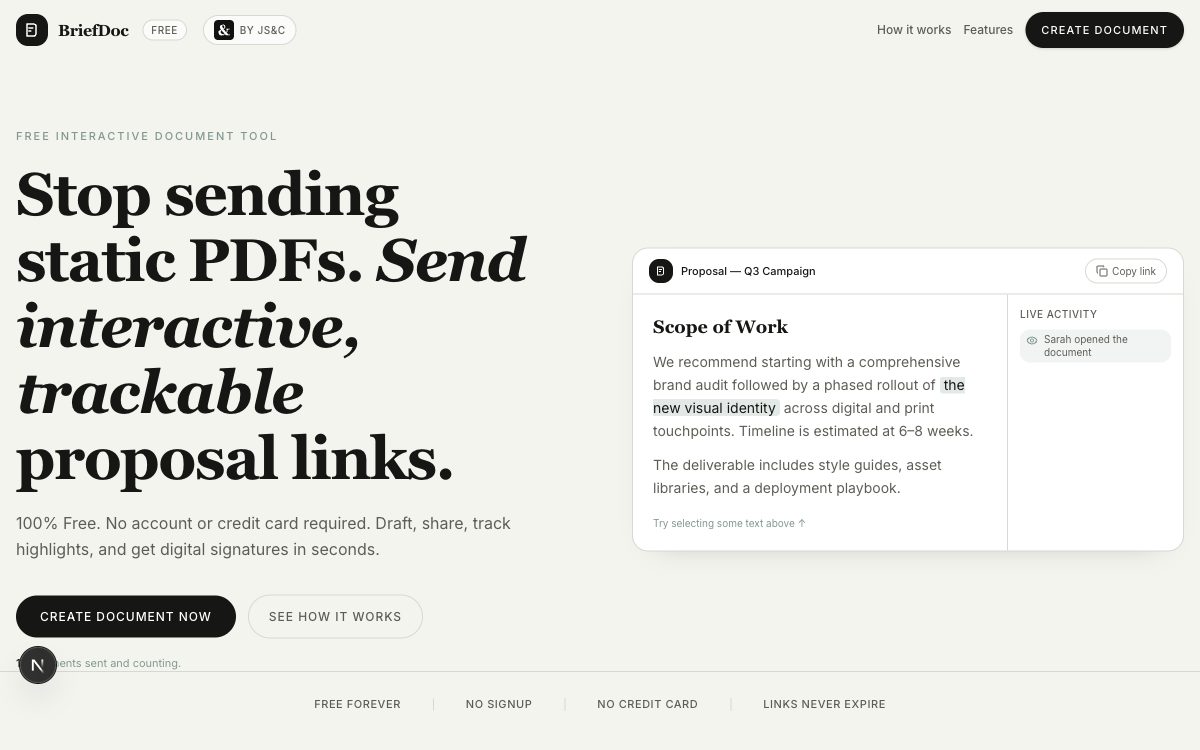
A free, no-login interactive document workspace that replaces static PDFs: draft, share, track how clients read, and collect digital signatures in the browser.
- Next.js
- React
- TypeScript
- MongoDB
- Mongoose
- Tailwind CSS
- shadcn/ui
Overview
BriefDoc is a free, no-login document workspace. Draft a proposal in Markdown, publish a link, and share it with a client. Every time the client opens the document, highlights a passage, leaves a comment, or signs, the host sees it in a live activity feed. No accounts, no PDF attachments, no follow-up guesswork.
It is also a product-led lead generator. The tool is free to use, carries subtle Jonathan Simpson & Co. branding, and points custom software and consulting enquiries back to this site.
The Brief
Most proposals are born as a PDF and die in an inbox. The sender knows the file was delivered. They do not know whether it was opened, which sections were read, what confused the client, or when to follow up. Getting a signature means at least one more email, usually three.
The brief: remove the static file from the loop. Clients should read, react, and sign without installing anything or creating an account. Hosts should see what happened instead of wondering what happened.
The Product
- Instant creation.
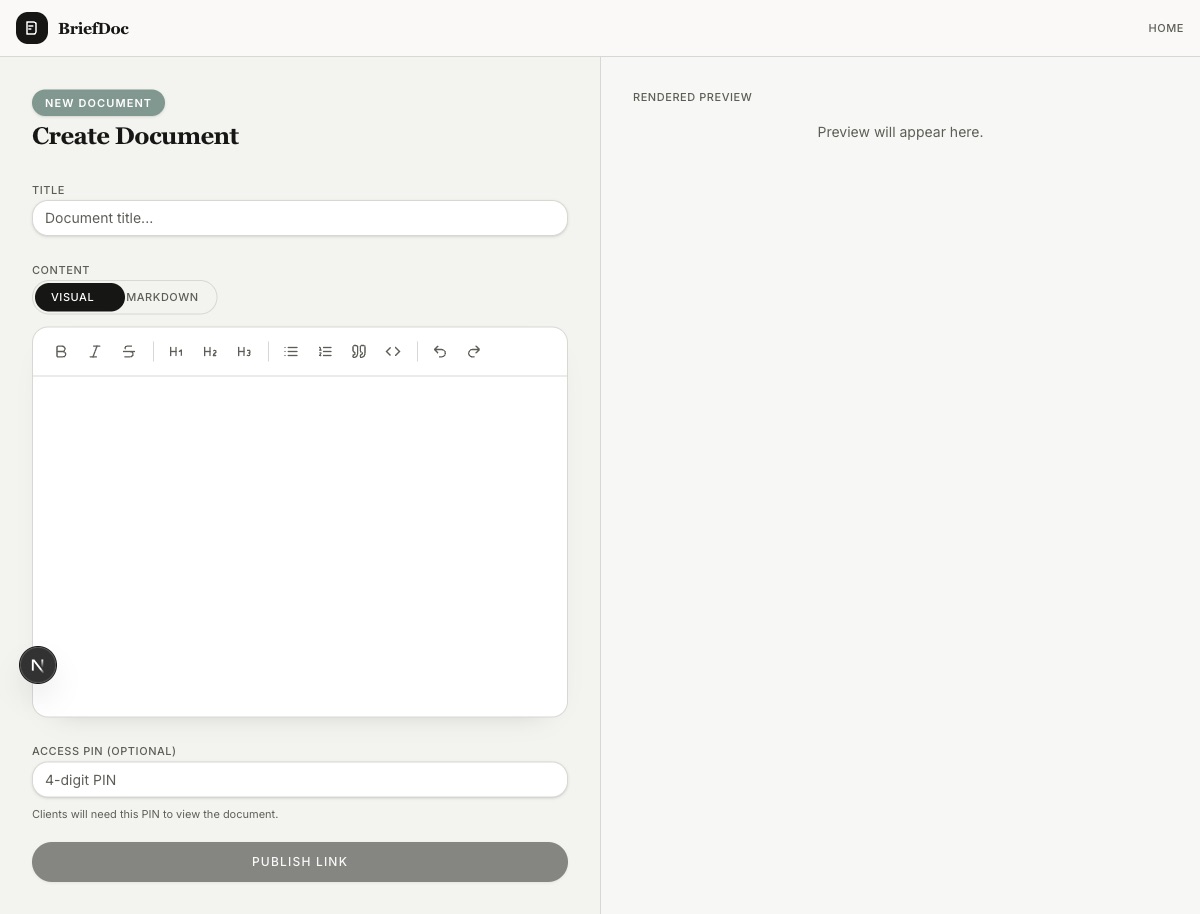
/createtakes a title and Markdown content, with an optional 4-digit PIN. Publish generates two links with one-click copy: a host edit link secured by a secret token, and a shareable client link. - PIN-gated client access. Opening a client link prompts for name and email, plus the PIN when the host set one. The session persists, so returning clients skip the modal.
- Live highlights and comments. Clients select any passage in the rendered document and comment on it. Each comment stores the highlighted snippet, and the host reads the thread in a sidebar.
- Real-time viewing feed. A heartbeat every 15 seconds records scroll depth. The host dashboard logs every meaningful event: opened, highlighted, commented, signed, or an attempted PDF export.
- Digital signing. The primary CTA is Approve & Sign. The client types their name, ticks the agreement, and the document seals: editing and commenting lock, and a timestamped signature badge is appended.
- A gentle PDF warning. Exporting to static PDF warns that live comments and signatures do not survive the print, with a browser print fallback for those who insist.
Design & Engineering
BriefDoc runs on the same editorial system as this site: warm cream surfaces, the sage accent, Georgia display type, and IBM Plex Mono where the details matter. Building the tool on the agency’s own design language keeps the product coherent with the brand it promotes.
The stack is Next.js 15 with the App Router, Tailwind CSS, and shadcn/ui. Documents, client sessions, comments, and activity make up four Mongoose models on MongoDB. Markdown renders with react-markdown and remark-gfm. Host access is a secret token in the URL; client sessions use HTTP-only cookies plus a local session id. The page ships structured data for search, and the free tier is enforced by design: there is no account model to gate.
Outcome
BriefDoc replaced static PDFs for the agency’s own proposals and now runs free for anyone who needs a tracked, signable document link. It demonstrates the product side of what we do, and every footer banner quietly points back to jonathansimpson.co.
Outcome: Shipped a free, no-account document tool that turns static proposals into trackable links (real-time reading analytics, inline comments, and digital signatures) while funnelling product-led demand back to the agency.