What you’ll learn: This post breaks down the true cost of stacking cheap SaaS tools, including subscription creep, integration debt, and vendor lock-in, and shows how a single custom-built system usually pays for itself within 18-24 months.
How “just 200K a month” becomes 10 million a year
Walk through a typical growing business’s software stack and you’ll find something like this:
- Accounting/invoicing app: $9/month
- Inventory tracking tool: $13/month
- Team communication (Slack/WhatsApp Business API): $7/month
- Customer database / basic CRM: $11/month
- Email marketing or messaging tool: $6/month
That’s $47/month, or $560/year. And that’s a conservative stack. Add a second location or a few more users (most SaaS tools charge per seat), and the number climbs quickly. A business with 5 staff members on a tool that charges $6/user/month is looking at $30 for that one service alone.
But the subscription fees are only the visible cost.
The integration tax
The real problem: These five tools don't talk to each other. Your inventory doesn't update when an invoice is paid. Your CRM doesn't know what products a customer bought. Your team spends hours each week copying data between systems, work that produces nothing but keeps the tools in sync.
The time cost of manual data transfer:
- Reconciling inventory across tools: 3-5 hours/week
- Entering customer data twice (once in ordering, once in CRM): 2-3 hours/week
- Manually generating reports by exporting from one tool and importing into another: 1-2 hours/week
- Fixing synchronization errors (wrong quantities, duplicate entries): 1-2 hours/week
At a modest hourly rate of $3, that’s 7-12 hours per week × $3 × 52 weeks = $1,140–1,950/year in pure labor cost. Add that to the $560 in subscription fees, and the real cost is $1,700–2,500 per year.
Vendor lock-in: when “affordable” turns expensive
SaaS pricing follows a predictable pattern:
- Year 1: Competitive entry pricing. You sign up.
- Year 2: “Platform improvements” justify a 20-30% price increase.
- Year 3: A new pricing tier is introduced. Features you used to have on the base plan now require the “Pro” tier at 2× the cost.
- Exporting data: When you try to leave, you discover your data exports are incomplete, in proprietary formats, or behind a “data export” paywall.
We’ve seen businesses whose SaaS bills tripled in 36 months, not because they grew, but because the pricing changed around them. And by the time they realised, they had two years of operational data locked inside tools they couldn’t easily leave.
When a custom system breaks even
A custom system makes financial sense when
- You're spending $900+/year on SaaS subscriptions
- Your team spends 5+ hours/week on manual data transfer between tools
- Your business has processes that don't fit standard SaaS templates (multi-location, marketplace + physical + WhatsApp orders)
- You need data across tools to talk to each other, including inventory, orders, customers, and invoices, in one view
Here’s the comparison in practice:
| 5 SaaS Tools | One Custom System | |
|---|---|---|
| Year 1 cost | $550 subscriptions + $1,250 labor | $1,600 build (one-time) + $380 hosting |
| Year 2 cost | $690 subs (price increase) + $1,250 labor | $380 hosting |
| Year 3 cost | $880 subs + $1,250 labor | $380 hosting |
| 3-year total | $5,900 | $2,700 |
The custom system saves over 50% by year 3 and gives you software that fits your actual workflow, not someone else’s template.
What “custom” actually means (no jargon)
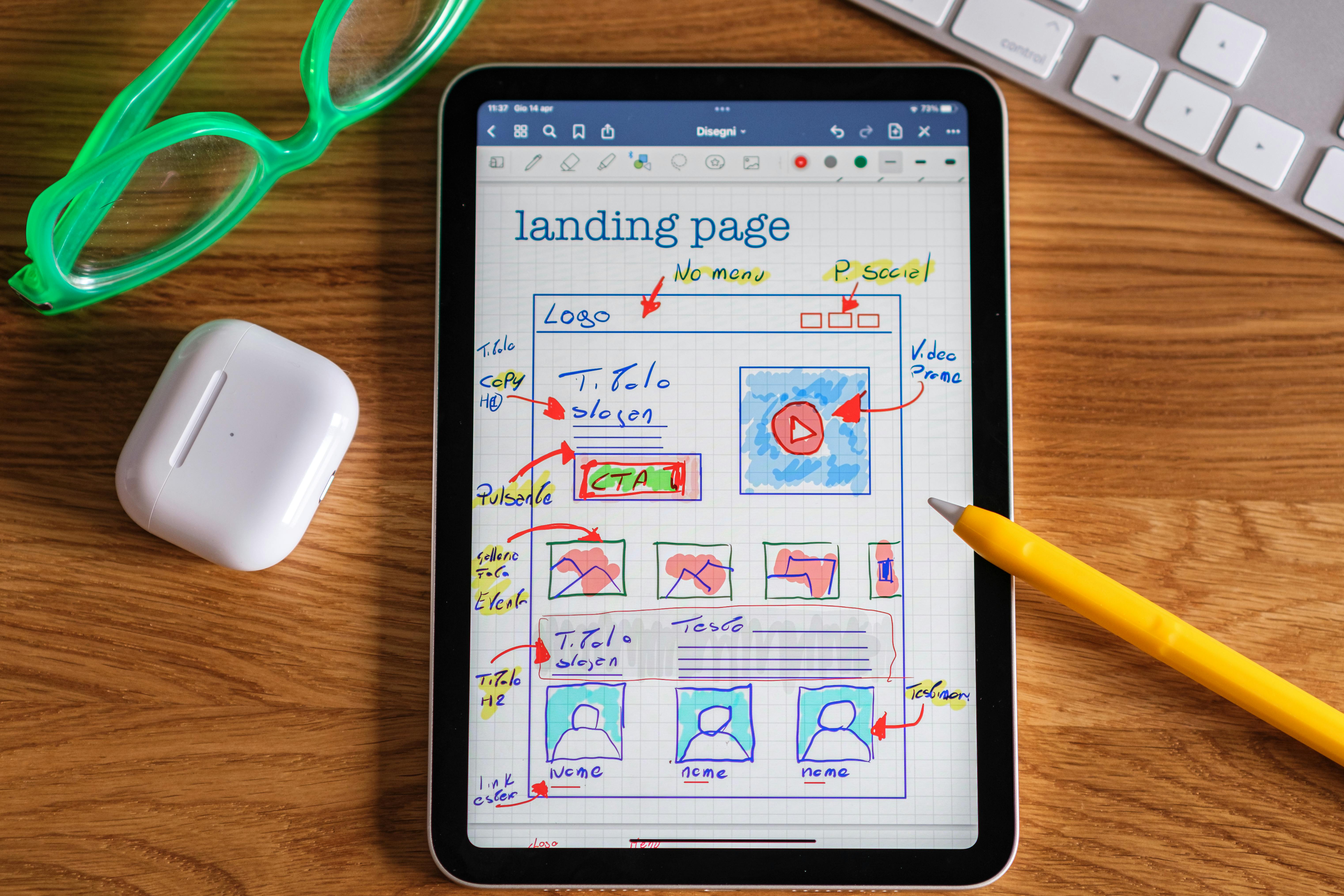
A custom system isn’t a scary enterprise project. At its simplest, it’s:
- A database that stores your products, orders, and customer information in one place, not five
- A website or dashboard your team can use to enter orders, check stock, and see reports
- Automated connections between the parts that used to require manual copying
We build these as web applications; they work on any device with a browser, don’t require installing software, and can grow with your business. If you can use WhatsApp and a spreadsheet, you can use a well-designed custom system.
Frequently Asked Questions
In year 1, yes. By year 2-3, usually no. The break-even comes when your SaaS stack costs more than the one-time build cost. For businesses spending $65+/month on subscriptions, a custom system typically pays for itself within 18-24 months.
Unlike SaaS tools, a custom system can grow with you. Adding features, new integrations, or scaling to more users doesn't trigger a new pricing tier; you pay for the development work once and own the result.
Yes. Data migration from spreadsheets, most SaaS tools, and marketplace exports is a standard part of every custom build we do. Your historical data comes with you.